

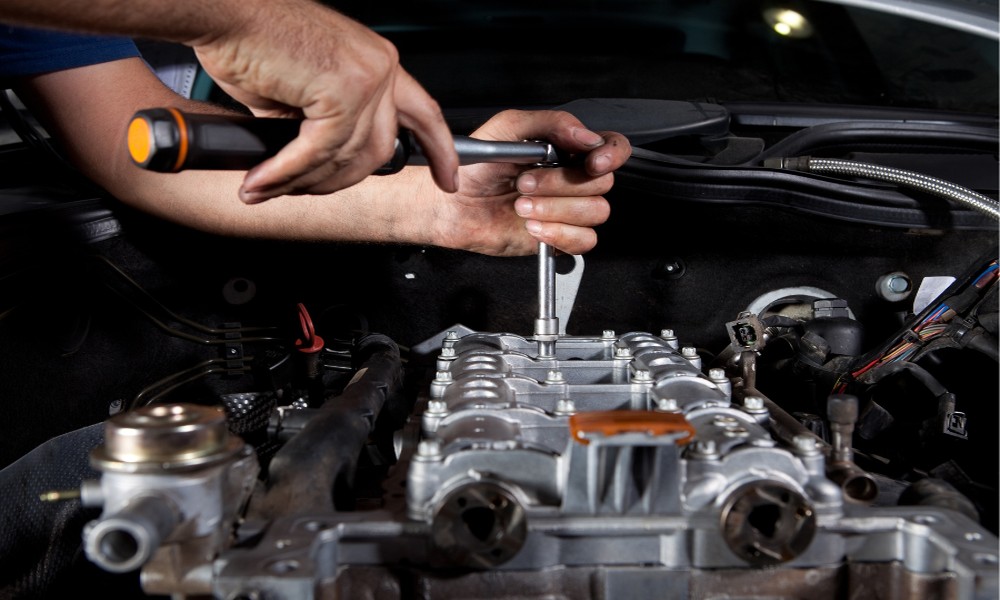
Most transmission problems don’t start as emergencies. They start as something small – a slight hesitation when the truck shifts into third, a faint shudder you feel more than hear, a smell you notice once and then forget about. By the time a driver in the Magic Valley region ends up stranded on the side of Highway 30 or parked in a field with a truck that won’t move, the transmission problem they’re dealing with is usually one that showed up weeks or months earlier and got pushed aside. Mountain Transmission Centers has seen this pattern consistently in Burley and the surrounding communities: the repair that could have cost a few hundred dollars in early diagnostic and service work becomes a full rebuild because the early signs weren’t acted on. Knowing what to watch for – and what those signs actually mean – is what separates a manageable repair bill from a significant one.
The Transmission Stress Factors That Are Specific to Magic Valley
Before getting into specific symptoms, it’s worth being clear about why transmission wear tends to be more pronounced for vehicles in this part of Idaho than for drivers in areas with lighter-duty usage patterns.
Towing is the biggest factor. A significant share of vehicles in Cassia County and the surrounding Magic Valley region pull trailers – hay trailers, horse trailers, boat trailers on trips to Milner or Murtaugh, campers heading toward the Sawtooths, and livestock transport that runs regularly during calving and shipping seasons. Every towing event puts the transmission under load conditions that heat the fluid faster and cycle the clutch packs harder than normal driving. A truck that regularly tows near or at its rated capacity is aging its transmission at a meaningfully faster rate than the mileage on the odometer reflects.
Temperature extremes matter as well. Southern Idaho’s climate swings between summer heat – July temperatures in the Burley area regularly exceed 95°F – and winters where temperatures drop below zero in the Snake River Plain. Transmission fluid loses viscosity in extreme heat and thickens in extreme cold. Both conditions affect how well the fluid lubricates and protects the clutch packs and valve body. A transmission that’s never had its fluid changed may have fluid that performs adequately in mild conditions but fails to protect adequately at the temperature extremes that Magic Valley delivers every year.
High-mileage working trucks are the norm rather than the exception. A farm or ranch truck with 200,000 miles on it isn’t unusual in this area. Age and mileage aren’t inherently problems, but they make the early warning signs more likely to appear – and more important to catch.
Shifting That Doesn’t Feel Right Anymore
The most common early symptom of a transmission problem is a change in how the vehicle shifts. This can take several forms, and they’re worth distinguishing.
Delayed engagement is when you shift from Park to Drive or Reverse and the vehicle takes longer than usual to respond – a pause of one to three seconds before it actually moves. Some drivers dismiss this as the truck being cold in the morning. Cold weather does affect engagement time, but if the delay persists after the vehicle has warmed up, it’s typically a sign that fluid pressure is lower than it should be, either from a leak, low fluid level, or a failing pump.
Rough or hard shifting describes a thunk or jolt when the transmission changes gears – a sensation that feels more abrupt or aggressive than the smooth progression the driver is used to. This often points to a problem in the valve body, which controls the hydraulic circuits that direct fluid pressure during shifts, or to worn clutch packs that are engaging less smoothly than they should.
Slipping between gears is the symptom that tends to alarm drivers most, and it should. The engine revs increase – the tachometer climbs – but the vehicle doesn’t accelerate in proportion to the engine speed. The transmission is momentarily losing its connection between the engine and the drivetrain. Slipping is a sign that clutch material has worn down to the point where the friction surfaces aren’t holding properly. Left unaddressed, slipping typically progresses and can lead to complete loss of drive.
Sounds That Don’t Belong
Transmissions aren’t supposed to make distinctive noises during normal operation. When they start to, it’s usually a mechanical signal worth investigating rather than ignoring.
A whining or humming sound that changes with vehicle speed, rather than engine RPM, often originates in the transmission or drivetrain rather than the engine. Worn bearings inside the transmission produce this kind of sound. Planetary gear damage can produce a grinding that’s most noticeable during specific gear ranges.
Clunking during gear changes – a sound accompanied by a physical impact feeling through the drivetrain – can indicate worn motor mounts, worn drivetrain components, or issues within the transmission itself. The specific location of the sound (whether it’s felt through the floor, heard from the rear, or comes from under the hood) helps narrow down the source.
The important thing about transmission sounds is that they don’t typically resolve on their own. A bearing that’s producing noise is wearing. Each mile driven on it is removing material that isn’t coming back.
Fluid Condition: The Easiest Check Most Drivers Skip
Automatic transmission fluid should be red to pink in color and have a slightly sweet smell. Checking it takes about thirty seconds. Most drivers never do it between oil changes.
Fluid that has turned dark brown or black has oxidized – it’s been overheated at some point in its service life. The oxidation products in the fluid are abrasive and corrosive to the clutch packs and other internal components. Dark fluid is a sign that the transmission has run hot, and it’s a sign worth acting on rather than ignoring.
Fluid that smells burnt confirms the same thing the color tells you: the fluid has been subjected to heat beyond what it was designed to handle. This happens most often in vehicles that tow frequently without adequate transmission cooling, or in vehicles whose transmission cooler lines are partially obstructed or whose transmission cooler is undersized for the load being pulled.
Metal particles or a gritty texture in the fluid is a more serious finding. Some fine metallic content in transmission fluid is normal as components wear gradually over high mileage. Significant contamination – enough to see or feel – indicates internal component wear that has generated debris, and that debris is circulating through the transmission and causing additional damage with every mile driven.
Check Engine Codes and the Transmission Connection
Most drivers know the check engine light as a general warning. What many don’t know is how many of the codes that trigger it are transmission-related rather than engine-related.
Codes in the P0700 range – P0715, P0720, P0730, and others in that series – relate specifically to transmission system malfunctions: input shaft speed sensor faults, output shaft speed sensor faults, gear ratio errors, and shift solenoid problems. These codes can appear before any noticeable drivability symptom, which makes them particularly valuable as early warning signals. A vehicle throwing a P0730 “Incorrect Gear Ratio” code is telling you something is mechanically wrong in the gear train before the driver may have noticed anything feel different.
Solenoid codes are often among the earlier transmission fault codes to appear and are among the least expensive to address if caught before secondary damage accumulates. A shift solenoid that’s failing intermittently will eventually fail completely – and by the time it does, the erratic shifting it has been causing may have worn other components as well.
The Cost Math That Makes Early Service the Obvious Choice
A transmission diagnostic at Mountain Transmission Centers – inspecting fluid condition, checking for fault codes, and assessing drivability symptoms – identifies what’s actually happening before any decision is made about repairs. For the large proportion of transmission complaints that turn out to be fluid service, a solenoid replacement, or a valve body adjustment, that diagnostic and the resulting service costs a fraction of what a rebuild requires.
A full automatic transmission rebuild on a half-ton or three-quarter-ton truck – the most common vehicles in this area – runs into the thousands of dollars. Most of those rebuilds are eventually necessary because earlier, cheaper intervention was deferred long enough that the internal damage became extensive. The transmission that slipped occasionally for three months before completely failing could have been rebuilt at the slipping stage for meaningfully less than it cost after the failure had caused additional damage to the torque converter, the case, and other components.
Catching problems early isn’t just about saving money in the abstract. For a working truck or farm vehicle in the Magic Valley, a transmission failure at the wrong time – during calving, during harvest, while towing – has operational consequences that go well beyond the repair cost itself.
Bring It In Before the Problem Decides When
If your vehicle is showing any of the symptoms described here – delayed engagement, rough or slipping shifts, unusual sounds, dark or burnt fluid – the right move is a diagnostic before those symptoms become worse. The window between early symptom and significant damage is real but it closes. Waiting to see whether it gets better on its own is not a strategy that tends to work out well with transmissions.
Mountain Transmission Centers in Burley serves drivers throughout the Magic Valley, including Cassia County, Twin Falls, and the surrounding communities. We specialize in manual and automatic transmission diagnostics, service, and repair – from fluid changes and clutch replacements to complete rebuilds when they’re genuinely necessary. Call us or stop by to schedule a diagnostic. We’ll tell you what we find and what it actually takes to fix it.
