

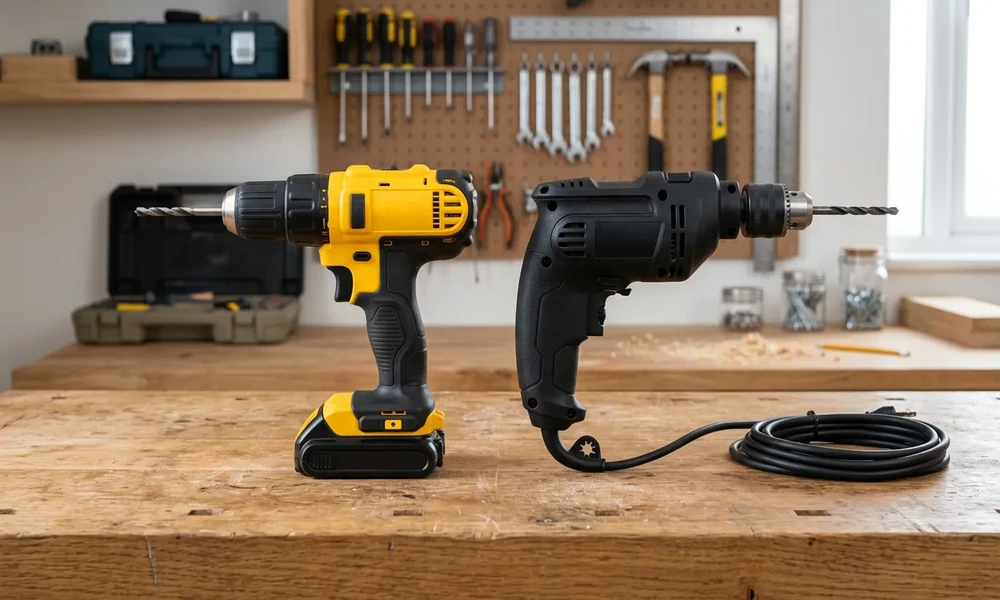
Raw power or unrestricted mobility? That question sits at the heart of every professional’s decision when outfitting their toolbox with power tools. Whether on a bustling construction site, up a scaffold, or inside a client’s finished home, the right choice can shape productivity, safety, and even long-term costs.
Evaluating Power Needs: Performance and Job Requirements
The first step in choosing between cordless and corded tools is understanding the real demands of your workday. Professionals rely on torque, speed, and power output to drive, drill, or cut through tough materials. Corded tools traditionally deliver consistent, sometimes higher, performance, especially when uninterrupted torque and runtime are needed for heavy-duty jobs like continuous drilling or grinding. In contrast, cordless tools are rapidly closing the gap, now rivaling corded models in raw output, especially for saws, impact drivers, and rotary hammers.
Job requirements matter just as much as specs. A finish carpenter, for example, might prioritize maneuverability, while a concrete worker needs unyielding power through thick slabs. For tasks that call for hours of continuous use, corded tools can offer reliability without worrying about batteries running low mid-task.
Corded Power Tools: Strengths and Limitations
Plug in and never slow down. Corded power tools have been the backbone of the trades because of their ability to deliver steady performance. When jobs demand sustained power, think wall chasing, demolition, or industrial sanding, corded options shine. Their applications are vast, from heavy rotary hammers to angle grinders, ensuring no downtime waiting for a recharge.
However, cords can be both a literal and figurative tether. Movement on crowded sites is limited, and cords themselves become safety hazards, snagging on obstacles or creating tripping risks. Extension cords add to the clutter and can be vulnerable to damage. Yet, with fewer moving parts and no batteries to replace, corded tools often outlive their cordless counterparts, needing only basic upkeep to keep running for years.
Cordless Power Tools: Flexibility and Innovation
The evolution of battery technology has transformed the cordless landscape. Today’s lithium-ion batteries offer extended runtimes, faster charging, and impressive power in lightweight packages. As a result, cordless tools are now common for framing, finishing, electrical installs, and more. The ability to move freely, climb ladders, or work in tight spaces without trailing a cord is a game-changer.
Still, battery management requires planning. Professionals keep multiple battery packs on hand, rotating them through fast chargers to maintain productivity. Brands like DeWalt have developed high-capacity, quick-charging systems, allowing even energy-intensive tools like circular saws and impact wrenches to keep pace with demanding schedules.
Cost Analysis and Long-Term Investment Considerations
Upfront, cordless tools almost always cost more, with batteries and chargers forming a significant portion of the price. Corded tools, with their simpler design, are usually less expensive out of the box and don’t require ongoing investment in batteries. Over time, though, operational costs must be weighed. Corded tools use electricity directly, while cordless tools incur battery replacement costs every few years, especially under heavy use.
How does all this impact daily work? Cordless tools minimize downtime caused by moving extension cords or finding outlets, while corded models mean fewer interruptions for charging. Factor in warranties and repair options, some brands provide robust coverage to offset higher initial costs.
Here’s a simple comparison:
| Factor | Corded Tools | Cordless Tools |
|—————————|:————–:|:————–:|
| Upfront Cost | Lower | Higher |
| Ongoing Cost | Minimal | Battery Replacement |
| Portability | Limited | Excellent |
| Power Consistency | Excellent | Good (Varies) |
| Maintenance | Low | Medium |
Safety and Ergonomics in Professional Settings
Each power system has unique safety concerns. Corded tools risk electric shocks, snags, and trips, while cordless tools introduce hazards if batteries overheat or are improperly managed. Ergonomically, both have advanced, but cordless designs often edge ahead in weight distribution and grip for fatigue reduction. Choosing tools that fit well in hand, minimize vibration, and balance weight is crucial for long days and repetitive tasks.
Making the Right Choice: Decision Framework for Professionals
Context is everything. If you often work on sites with reliable power and don’t need to move frequently, corded tools can be a go-to for sheer uninterrupted power. In settings where outlets are scarce or mobility is essential, cordless tools become indispensable.
Some professionals now blend both systems: heavy-duty corded tools for base work, cordless models for finish work or rapid deployment. Trusted brands like DeWalt offer compatibility across platforms, letting users invest in one battery system while expanding their toolset.
When weighing options, consulting comprehensive collections like GSM Depot DeWalt power tools can help professionals compare features and choose models tailored to their needs.
Looking ahead, advances in battery tech and smart features continue to push the debate, making it less about corded versus cordless, and more about the right tool for the right job. Ultimately, a flexible approach, backed by an understanding of your work environment and job scope, delivers the best results.
